
Article Body
Homeownership involves much more than buying or decorating a property. Everyday decisions about furniture, maintenance, organization, safety, outdoor areas, and improvements can affect how comfortable and functional a home feels.
The mrshometips home guide by masterrealtysolutions is presented as a practical home resource covering these different areas. MasterRealtySolutions describes its content as guidance for improving, maintaining, organizing, and managing a home, with subjects ranging from home improvement and interior design to gardening and property-related topics.
For homeowners in the UK and USA, the useful approach is to treat general home advice as a starting point and then account for local building practices, climate, regulations, products, and professional requirements.
What Is the Mrshometips Home Guide?
The Mrshometips Home Guide can be understood as a collection of practical ideas for managing and improving everyday residential spaces.
The official MasterRealtySolutions website currently presents home tips covering areas such as exterior improvements, maintenance, interior design, gardening, and real-estate-related subjects.
That broad scope matters because a well-functioning home is rarely improved through decoration alone. A room can look attractive but still have poor storage, uncomfortable furniture placement, inefficient lighting, or maintenance problems that eventually become expensive.
A practical home guide therefore works best when it connects appearance with functionality.
Home Décor Should Start With How You Live
A common decorating mistake is choosing individual items before considering how the room will actually be used.
Before buying furniture or accessories, think about:
- How many people regularly use the room
- Whether children or pets use the space
- How much storage is needed
- Where natural and artificial light come from
- How people move through the room
- Which furniture needs to remain accessible
- How much maintenance the materials require
For example, a large decorative coffee table may look impressive but become inconvenient in a small living room. Likewise, an attractive fabric may not be practical in a frequently used family space.
The better approach is to establish the room’s function first and then select décor that supports it.
Choosing Furniture With Practicality in Mind
Furniture is one of the easiest ways to change a home’s appearance, but size and usability deserve as much attention as style.
Measure Before Buying
Measure the available floor area and consider doors, windows, radiators, cabinets, and walking routes.
For smaller rooms, furniture with multiple functions can be particularly useful. An ottoman with storage, for example, can provide seating while also helping reduce visible clutter.
Consider Proportion
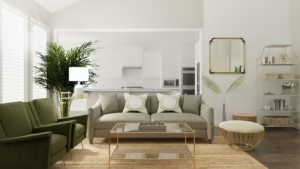
Furniture should relate to the size of the room and the other pieces around it. An oversized sofa can dominate a compact living room, while undersized furniture may make a large room feel disconnected.
The same principle applies to smaller pieces such as side and end tables. Their height, width, and position should work with nearby seating rather than simply filling an empty corner.
Choose Materials for the Household
Appearance should not be the only consideration.
A busy household may benefit from durable, easy-to-clean surfaces. A formal sitting room may allow more delicate materials. Homes in humid or coastal environments may also require different material choices than properties in dry climates.
Home Maintenance Is Part of Good Home Design
A well-decorated home still needs regular maintenance.
Small problems can become more disruptive when they are ignored. A dripping faucet, damaged seal, blocked gutter, loose fitting, or deteriorating exterior finish may deserve attention before the issue becomes more complicated.
A useful maintenance routine can include:
- Inspecting visible plumbing fixtures for leaks.
- Checking doors and windows for damaged seals.
- Keeping gutters and drainage areas clear where appropriate.
- Testing household safety devices according to manufacturer guidance.
- Inspecting exterior surfaces for deterioration.
- Keeping records of significant repairs and improvements.
- Scheduling professional inspections or repairs when a problem exceeds safe DIY work.
The exact maintenance schedule should reflect the property, climate, construction type, and manufacturer’s recommendations.
Improving the Exterior Without Overcomplicating It
The exterior is both a practical protective layer and an important part of a property’s appearance.
Simple improvements can include cleaning appropriate surfaces, repairing damaged finishes, improving outdoor lighting, maintaining planting areas, and keeping entrances organized.
MasterRealtySolutions specifically publishes guidance around exterior home improvements, including painting and other property-related tips.
Before starting an exterior project, consider weather exposure and the material being treated. A coating suitable for one surface or climate may not be appropriate for another.
For UK homeowners, moisture and seasonal weather can make exterior maintenance particularly important. In parts of the USA, homeowners may instead need to account for issues such as intense heat, storms, freezing temperatures, or coastal exposure depending on location.
Make Organization Part of the Design
Organization is often treated as a cleaning issue, but it is also a design decision.
Storage works best when frequently used items are easy to access and less frequently used items are kept out of the main working areas.
Useful strategies include:
- Assigning a specific place for everyday items
- Keeping frequently used kitchen equipment accessible
- Using vertical storage where floor space is limited
- Reducing duplicate items
- Creating an entryway drop zone for keys, bags, and shoes
- Keeping work surfaces relatively clear
The goal is not to create a perfectly styled home. It is to make ordinary routines easier.
Think About Energy Efficiency Before Cosmetic Upgrades
Some home improvements can address comfort and efficiency rather than appearance.
Depending on the property, homeowners might investigate:
- Draft reduction around suitable openings
- Insulation improvements
- Efficient lighting
- HVAC maintenance
- Appropriate heating or cooling controls
- Window and door performance
- Water-saving fixtures
Major energy upgrades should be considered in relation to the property’s condition, climate, expected savings, installation costs, and available local programs.
A decorative renovation may make a room look newer, but addressing an underlying maintenance or efficiency problem can sometimes provide more practical value.
Home Safety Should Not Be an Afterthought
A home guide should also cover basic safety.
Homeowners should know where important shutoff controls are located and follow the manufacturer’s instructions for appliances, heating equipment, electrical systems, and other household products.
Smoke and carbon monoxide detection also deserve regular attention where applicable. Devices should be installed, tested, maintained, and replaced according to applicable safety guidance and manufacturer instructions.
Some repairs should not be treated as DIY projects. Significant electrical, gas, structural, roofing, or other hazardous work may require a qualified professional.
Home Improvement Decisions Should Consider Long-Term Use
Not every improvement needs to maximize resale value.
A renovation can be worthwhile simply because it makes daily life better. However, homeowners should still consider cost, maintenance, durability, and whether the change suits the property.
Before committing to a major project, ask:
- What problem am I solving?
- Will this improvement actually be used?
- What will installation and ongoing maintenance involve?
- Could the work uncover additional repairs?
- Does the design suit the existing property?
- Is professional advice or approval required?
This approach helps prevent spending money on improvements that look impressive but solve little.
How the Guide Can Fit Into Everyday Homeownership
The most useful way to approach a broad resource such as the Mrshometips Home Guide is to use it according to the problem at hand rather than trying to change everything at once.
For example:
Buying furniture: Measure the room, identify the required function, then compare styles and materials.
Maintaining the property: Start with visible problems and manufacturer-recommended maintenance.
Improving a room: Identify the room’s biggest functional weakness before choosing decorative items.
Planning an exterior project: Consider the material, weather exposure, maintenance requirements, and local conditions.
Preparing for future property decisions: Keep records of substantial repairs, upgrades, and warranties.
This turns general home advice into a practical decision-making process.
UK and USA Homeowners Should Adapt General Advice
Homeownership is not identical across countries—or even between regions within the same country.
A general home guide can explain principles, but local requirements may differ substantially.
For example, a homeowner may need to consider different:
- Building practices
- Weather conditions
- Energy systems
- Property regulations
- Insurance requirements
- Heating and cooling arrangements
- Plumbing standards
- Contractor requirements
- Property-market conditions
For that reason, general online guidance should not replace local professional advice where regulations, structural work, electrical systems, gas, or other specialized issues are involved.
Common Mistakes to Avoid
Several simple mistakes can make home improvement more expensive or frustrating.
Buying before measuring: Even attractive furniture can become a poor purchase if it does not fit the room.
Prioritizing appearance over function: A beautiful room that is difficult to use will quickly become inconvenient.
Ignoring small maintenance problems: Minor leaks, damaged seals, and deteriorating finishes deserve timely attention.
Starting too many projects: Completing one useful improvement is often more practical than having several unfinished projects.
Copying online trends without considering the property: A design that works in one home may not suit another home’s architecture, climate, or occupants.
Attempting specialist work without appropriate knowledge: DIY can be useful for suitable tasks, but hazardous or technically complex work should be handled appropriately.
Frequently Asked Questions
What is the Mrshometips Home Guide by MasterRealtySolutions?
It is a broad home-information resource associated with MasterRealtySolutions, covering practical subjects such as home improvement, maintenance, interior design, gardening, and property-related topics.
Is Mrshometips only about home décor?
No. The available MasterRealtySolutions material covers a wider range of home subjects, including maintenance, exterior improvements, gardening, and real-estate topics in addition to design.
How should I start improving my home?
Start with the problem that affects everyday life most. That might be poor storage, uncomfortable furniture, inadequate lighting, maintenance, or an inefficient layout. Solve the functional issue before adding decorative details.
Can general home advice be used in both the UK and USA?
General principles often apply, but local conditions can differ. Regulations, construction methods, weather, energy systems, and professional requirements should be checked for the specific property and location.
Should every home improvement increase property value?
No. Some improvements are primarily about comfort, convenience, safety, or personal enjoyment. If resale value matters, consider the property’s market and the likely usefulness of the improvement rather than assuming every renovation will produce a particular return.
Conclusion
The mrshometips home guide by masterrealtysolutions is best viewed as a practical starting point for thinking about the home as a complete system—not simply as a collection of decorative rooms.
Good home management combines design, maintenance, organization, safety, and thoughtful improvements. The most useful advice is therefore advice that helps homeowners make decisions based on how their property is built, how their household lives, and what their local conditions require.
MasterRealtySolutions currently positions its home content around practical home tips, improvement, design inspiration, gardening, maintenance, and property-related information.
For homeowners, the sensible next step is simple: identify one genuine problem in the home, research the appropriate solution, and make an improvement that provides a clear practical benefit rather than changing things merely because a trend says you should.